Amid the global low-carbon transition, the activewear industry is undergoing a profound material revolution. Consumers no longer judge fabrics solely on functionality and comfort—they care deeply about the environmental footprint behind every garment.
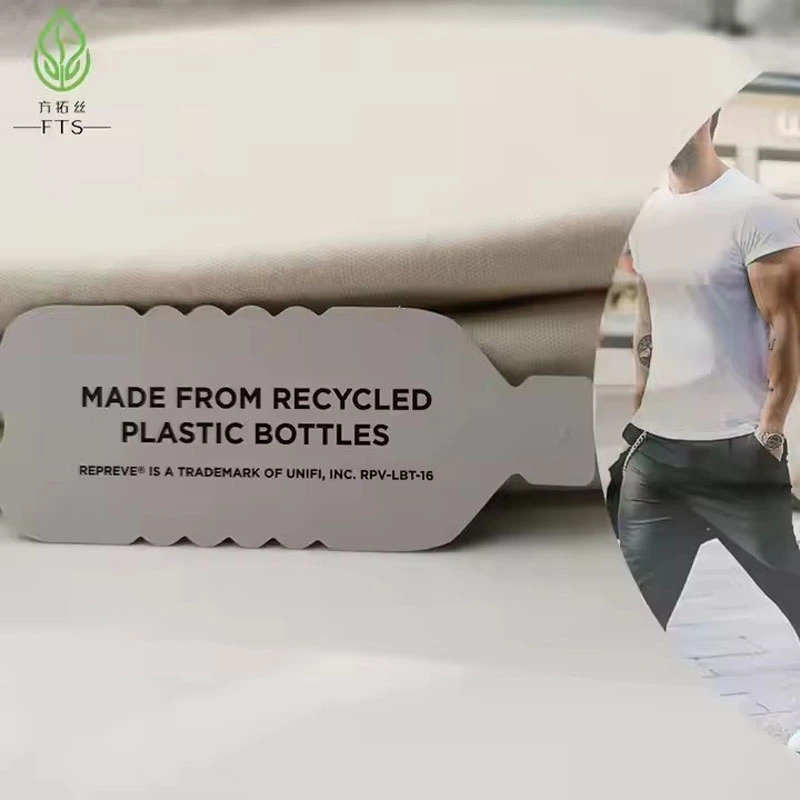
Recycled polyester (RPET)—a green material reborn from discarded plastic bottles—has become the top choice for premium performance brands. Fujian East Xinwei Textile Technology, backed by GRS certification, ISO 9001, and OEKO-TEX Standard 100, has built a complete lineup of recycled performance fabrics.
This guide presents six core recycled fabrics engineered for running vests, quick-dry tops, and team sports uniforms. We address the quality and functionality questions that matter most to brand buyers.
Style No. | Composition | Weight × Width |
R0301SF2 | 100% Recycled Polyester | 145gsm × 165cm |
R0306 | 50% Recycled Polyester + 50% Virgin Polyester | 145gsm × 165cm |
R0305 | 100% Recycled Polyester | 155gsm × 180cm |
R0318-1 | 100% Recycled Polyester | 180gsm × 180cm |
Core Features:
Classic honeycomb structure: Uniform micro-holes create a 3D surface that maximizes airflow and accelerates sweat evaporation.
Multi-weight options: 145g for lightweight summer running vests; 180g for structured football and basketball jerseys.
Moisture-wicking capillary effect: Grooved fiber channels rapidly transport sweat from the skin side to the outer layer for diffusion.
GRS traceable: Every batch of 100% recycled variants comes with full sourcing documentation for brand ESG reporting.
Best For: Marathon running vests, professional quick-dry T-shirts, football training jerseys, cycling wear main fabric.
Style No. | Composition | Weight × Width |
9802 | 100% Recycled Polyester | 150gsm × 160cm |
RD09-1-160 | 100% Recycled Polyester | 160gsm × 180cm |
RD09-1-100-800 | 100% Recycled Polyester | 180gsm × 180cm |
E0129 | 92% Recycled Polyester + 8% Spandex | 270gsm × 160cm |
Core Features:
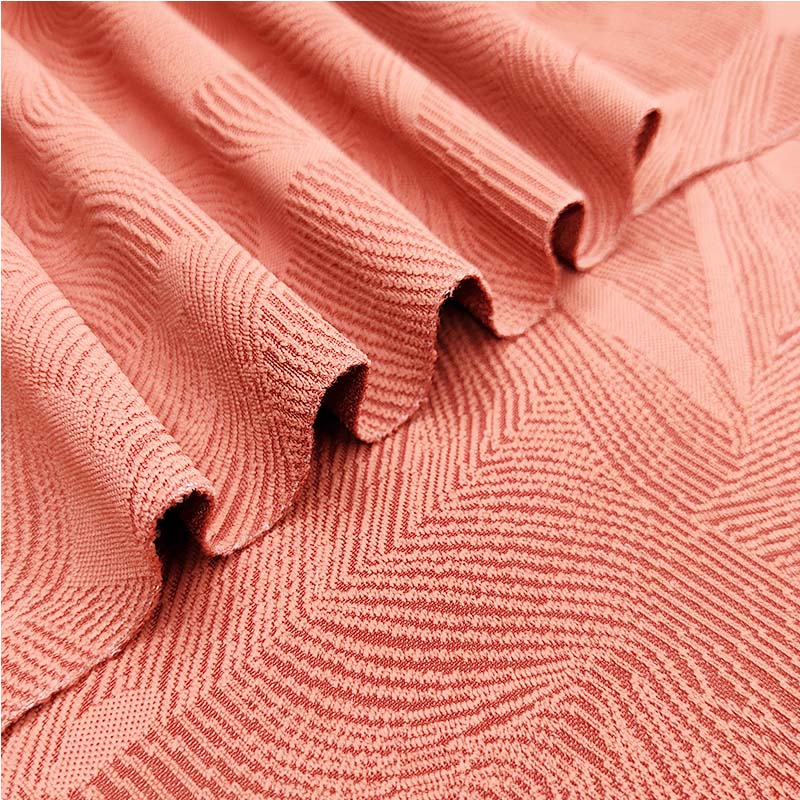
Textured pique surface: The signature granular feel stays dry against skin and won't cling when sweating.
Excellent shape retention: Superior structural stability compared to plain weaves. Collars and plackets resist sagging—Polo shirts stay crisp.
Elastane options available: The E0129 variant at 270g with 8% Spandex offers high stretch for premium sports Polos.
Vibrant dye saturation: Fibers take color evenly, ideal for logo embroidery and heat-transfer branding with sharp, clear results.
Best For: Sports Polo shirts, golf wear, corporate team uniforms, casual quick-dry T-shirts.
Style No. | Composition | Weight × Width |
EY-2-R183 | 100% Recycled Polyester | 160gsm × 183cm |
Core Features:
Fine micro-hole structure: Smaller, denser perforations than bird eye mesh for a more refined visual appearance while maintaining excellent breathability.
Extra-wide 183cm width: Significantly improves fabric utilization and reduces cutting waste for plus-size garments.
Two-sided texture contrast: Smooth and lustrous on the face side, breathable mesh on the reverse—reversible design potential.
Wash-resistant durability: High-tenacity polyester filament construction resists hole deformation, pilling, and snagging through repeated laundering.
Best For: Premium sports vests, sleeveless running tops, sports bra outer layers, gym wear panel inserts.
Style No. | Composition | Weight × Width |
RB01 | 50% Recycled Polyester + 50% Bamboo Fiber | 130gsm × 160cm |
Core Features:
Natural antibacterial deodorization: Bamboo kun (a natural bio-agent in bamboo) provides inherent antimicrobial properties—stays fresh even after prolonged exercise.
Silky-soft skin feel: Bamboo fiber delivers a luxurious, smooth hand feel that outperforms pure polyester in comfort—safe for sensitive skin.
Dual-function synergy: Recycled polyester provides quick-dry performance and durability; bamboo fiber contributes moisture absorption and natural odor control.
Ultra-light 130g: Barely-there wearing sensation, perfect for extended summer outdoor activities.
Best For: Yoga wear, morning run T-shirts,贴身 sports base layers, gym long-sleeve liners.
Style No. | Composition | Weight × Width |
E033AS | 100% Recycled Polyester | 160gsm × 160cm |
Core Features:
Longitudinal stripe texture: Vertical mesh stripes create a slimming visual effect—wearers appear taller and sharper.
Directional moisture channels: Vertical grooves guide sweat along the body's length for rapid diffusion, preventing localized wet patches.
Balanced 160g weight: Straddles breathability and coverage—neither too sheer nor too heavy.
Built-in design appeal: The unique stripe texture works as a full-garment main fabric or side-panel accent.
Best For: Slim-fit sports T-shirts, track and field training wear, basketball vest side panels, coordinated sports sets.
Style No. | Composition | Weight × Width |
R8809 | 100% Recycled Polyester | 140gsm × 170cm |
Core Features:
Universal hexagonal mesh: The most widely used mesh structure in activewear—consistent, balanced breathability.
Multi-scenario versatility: Functions equally well as main fabric, lining, pocket material, or ventilation panel inserts.
Outstanding cost-performance: Mature weaving process, stable quality, and fast lead times—ideal for large-volume sports uniform orders.
Practical 170cm width: Standard width compatible with most sports apparel cutting layouts, maximizing material utilization.
Best For: Sports jacket linings, basketball vests, school sports uniforms, backpack ventilation mesh.
Q1: Does recycled polyester underperform compared to virgin polyester?
A: No. High-quality recycled polyester is produced by re-melting and spinning recovered PET bottle flakes. The molecular structure is identical to virgin polyester. Our recycled fabrics match virgin polyester across all critical physical metrics—breaking strength, tear strength, and color fastness. Some high-tenacity variants even outperform standard virgin polyester. The only difference is the raw material source, not final performance.
Q2: How fast does the quick-dry function actually work? What standards do you meet?
A: All our sports-grade recycled fabrics undergo moisture-wicking treatment and meet the premium-grade requirements of GB/T 21655.1 (Textiles — Evaluation of Moisture Absorption and Quick-Drying). For the bird eye mesh specifically:
Water droplet spread time: ≤ 3 seconds
Evaporation rate: ≥ 0.18 g/h
Core zone dry time: Under 20 minutes
The more three-dimensional the mesh structure, the better the airflow—and the stronger the quick-dry performance.
Q3: Can recycled fabrics receive antibacterial, UV protection, and other functional finishes?
A: Absolutely. Our recycled fabric bases are compatible with a wide range of functional finishing processes:
Finish Type | Technology | Performance Standard |
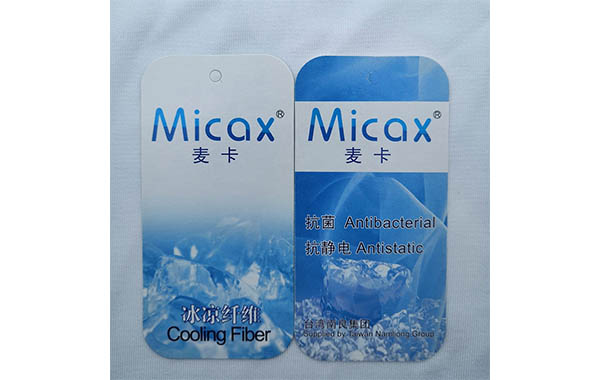
Anti-Bacterial / Anti-Odor | Silver ion or bamboo charcoal | AAA-grade bacterial inhibition |
UPF 50+ UV Protection | UV-blocking finishing | UV blockage rate ≥ 98% |
Cooling Sensation | Contact cool finish | Qmax ≥ 0.15 (instant cool touch) |
Anti-Static | Anti-static treatment | Reduces cling and static build-up |
Specific functions can be customized to your brand's requirements.
Q4: What does GRS certification actually mean for my brand?
A: GRS (Global Recycled Standard) is the most authoritative international certification for recycled materials. It verifies not only the recycled content percentage in the finished product but also mandates full-chain traceability—covering recycled source verification, social responsibility, and environmental emissions across the entire supply chain.
As a fully GRS-certified facility, we provide Transaction Certificates (TC) for every recycled order. This enables your brand to:
Legally label products with recycled content claims
Fulfill ESG reporting requirements
Qualify for entry into premium European and North American retail channels
Q5: How is the color fastness? Will sports apparel fade after frequent washing?
A: We use high-temperature, high-pressure overflow dyeing combined with fixation finishing. All fabrics meet OEKO-TEX Standard 100 requirements:
Wash fastness: Grade 4–5
Rubbing fastness (dry/wet): Grade 4+
Perspiration fastness: Grade 4–5
Light fastness: Grade 4+
Under normal home laundry conditions, dark fabrics retain their original color after 50 wash cycles with no noticeable whitening or fading.
Q6: How do you prevent pilling? Sports apparel undergoes heavy friction.
A: We control pilling across three production stages:
Raw material: High-strength, low-shrinkage recycled polyester filament with superior breaking tenacity—fibers resist snapping into pills.
Knitting: Optimized loop structure and yarn twist reduce surface float length, lowering friction-induced pilling risk.
Finishing: Heat-setting and singeing processes minimize surface hairiness.
Finished fabric achieves Grade 4+ pilling resistance (GB/T 4802.1 standard), meeting the quality requirements of professional sportswear brands.
Q7: What is the typical lead time?
A: Standard lead time: 15–20 days for greige fabric dyeing, plus 3–5 days for functional finishing. For bulk orders, we guarantee ≥ 98% on-time delivery rate and support partial shipment scheduling.
The biggest pain point of summer sports is the sticky, suffocating feeling in high heat and humidity. A qualified summer sports fabric must conquer five challenges simultaneously: breathability, quick-drying, lightweight, sun protection, and skin comfort. Below, we analyze each fabric's cooling attributes through real-world summer wearing scenarios.
Mornings and evenings are cool; midday is warm. Choose fabrics with moderate substance but good breathability to transition from morning runs to daytime commutes.
Priority | Fabric | Why |
Top Pick | Recycled Pique 150–160g | Crisp and structured—seamless transition from office to sports field |
Runner-Up | Recycled Vertical Mesh 160g | Slimming silhouette for city jogging and gym sessions |
Styling Tip: Short-sleeve Polo + sports shorts. Add a light jacket for early mornings.
The prevailing temperature range for most regions in summer. Sweat output increases significantly—quick-dry and breathability become the top priorities.
Use Case | Fabric | Why |
High-Intensity Sports | Recycled Bird Eye Mesh 145g | 3D ventilation structure—stays dry even during heavy sweating |
Daily Casual | Recycled Bamboo Jersey 130g | Natural cooling + antibacterial—all-day comfort |
Women's Activewear | Recycled Mini Eyelet Mesh 160g | Breathable without transparency—confident solo wear |
Styling Tip: Vest or short-sleeve top + quick-dry shorts. Choose light colors to reduce heat absorption.
Mid-summer heatwaves or tropical southern regions. Fabrics must achieve ultimate lightness and maximum ventilation, plus sun protection.
Priority | Fabric | Why |
Top Pick | Recycled Bird Eye Mesh 145g + UPF 50+ finish | Maximum airflow + UV protection—outdoor essential |
Runner-Up | Recycled Polyester Mesh 140g | Full hexagonal mesh ventilation—perceived temperature drops noticeably |
Functional Upgrade: Add Cooling Finish—instant skin temperature reduction of 1–2°C upon contact.
Styling Tip: Loose-fit vests to minimize fabric-to-skin contact and maximize air convection.
Southern China's plum rain season or coastal high-humidity areas. The air itself is saturated, making sweat evaporation difficult—placing extreme demands on quick-dry capability.
Priority | Fabric | Why |
Top Pick | Recycled Bird Eye Mesh | 3D structure allows air to pass through and carry moisture away—dries 30% faster than flat fabrics |
Warning: Avoid high-GSM, high-density fabrics in high humidity—they get heavier and more stifling.
Functional Upgrade: Anti-bacterial finish is essential—bacteria multiply faster in humid environments.
Many assume lower GSM equals cooler wear. Not true. Breathability depends on structure, not thickness.
A 140g high-density plain weave may have far worse airflow than an 180g mesh fabric—because mesh has actual holes for air to pass through, while tightly packed plain-weave fibers block ventilation.
Our bird eye mesh ranges from 145–180g, yet its 3D mesh structure delivers 2–3× the airflow of a plain weave at the same weight. When selecting summer fabrics: judge the structure and breathability rating, not just the GSM number.
For daily wear, cotton feels pleasant against the skin. But for sports, cotton is a summer hazard.
Cotton absorbs sweat aggressively but wicks it terribly—moisture gets locked inside the fibers. The result: a heavy, wet garment clinging to your body, chilling you when the wind blows (increasing cold risk), and causing skin chafing through prolonged wet friction.
The RPET + mesh structure combination absorbs sweat and rapidly transports it to the surface for evaporation, keeping the fabric dry against your skin. This is the correct choice for summer sports.
Black does absorb more radiant heat than light colors—but only noticeably so under static, direct sunlight. Once you are moving with airflow, the fabric's breathability has a far greater impact on perceived temperature than its color.
A breathable black mesh can feel cooler than a non-breathable light-colored plain weave. If solar heating is a genuine concern, choose our UPF 50+ finished fabrics—UV rays are blocked and reflected before converting to heat on your skin, which is more effective than simply picking a light color.
Garment Panel | Recommended Fabric | Why |
Top / Vest (Main) | Recycled Bird Eye Mesh 145g | Maximum airflow—sustained dryness over long distances |
Side Panels | Recycled Vertical Mesh | Enhanced torso flank ventilation + visual slimming |
Back Neck / Underarm | Recycled Mini Eyelet Mesh | Targeted ventilation at high-sweat zones—fine texture, no skin irritation |
Garment | Recommended Fabric | Why |
Match Jersey (Main) | Recycled Bird Eye Mesh 155–180g | Structured body, crisp number/logo printing, unified team look |
Training Wear | Recycled Polyester Mesh 140g | Cost-effective, durable—top pick for bulk team orders |
Polo-Style Team Shirt | Recycled Pique 160g | Formal and polished for ceremonies and award presentations |
Garment | Recommended Fabric | Why |
Form-Fitting T-Shirt | Recycled Bamboo Jersey 130g | Silky smooth, no cling when sweating, natural antibacterial |
Cover-Up / Outer Layer | Recycled Mini Eyelet Mesh | Subtle sheer aesthetic—stylish for gym mirror selfies |
Vest Style | Recycled Vertical Mesh | Vertical stripes elongate proportions for a better visual silhouette |
Garment | Recommended Fabric | Why |
Polo Shirt | Recycled Pique 150–160g | Classic business-sport crossover—sweat marks less visible, suitable for clients and the course |
Skirt / Shorts | Recycled Mini Eyelet Mesh | Light and airy, no cling during movement—balances aesthetics and function |
Choosing the right fabric is only half the battle. Proper care ensures your summer activewear retains its function and appearance season after season.
Care Rule | Why |
Wash promptly—don't let sweat sit | Sweat mixed with bacteria breeds in the laundry basket, causing odors and fiber degradation. Wash on the same day as wear. |
Cold water, gentle cycle | Use water ≤ 30°C. High heat damages quick-dry coatings and fiber structure. Turn mesh fabrics inside out to reduce snagging. |
Skip the fabric softener | Softeners coat fibers with a film that clogs moisture-wicking pores—quick-dry performance degrades. Use standard laundry detergent only. |
Air dry in shade | Avoid direct sunlight. Prolonged UV exposure accelerates fiber aging and color fading. Hang mesh fabrics carefully to avoid stretching. |
Do not iron | Polyester has a low melting point. High-temperature ironing shrinks mesh pores and wrinkles fabric. Use low-temperature steam hanging if needed. |
With the above care routine, our recycled sports fabrics retain over 85% of their quick-dry performance after 50 wash cycles—full-season functionality without degradation.
Summer sports demand fabrics that breathe, wick, and endure—and increasingly, fabrics that tell a sustainability story. East Xinwei's six recycled sports fabric series delivers on all fronts: technical performance verified by lab data, environmental credentials backed by GRS certification, and versatility across every summer sport and temperature zone.
Ready to elevate your next activewear collection? Contact us for samples and technical spec sheets.