Choosing the right stretch fabric affects fit, comfort, durability, color, production cost, and the final positioning of an activewear collection. Two of the most common options are polyester spandex fabric and nylon spandex fabric. Both provide elasticity and shape recovery, but they perform differently in finished garments.
Polyester blends are often selected for fast-drying sports tops, teamwear, cycling apparel, and scalable performance collections. Nylon blends are frequently preferred for premium leggings, yoga wear, sports bras, and other close-fitting garments where softness matters.
The better choice depends on the intended product, target price, desired hand feel, finishing requirements, and testing standards.
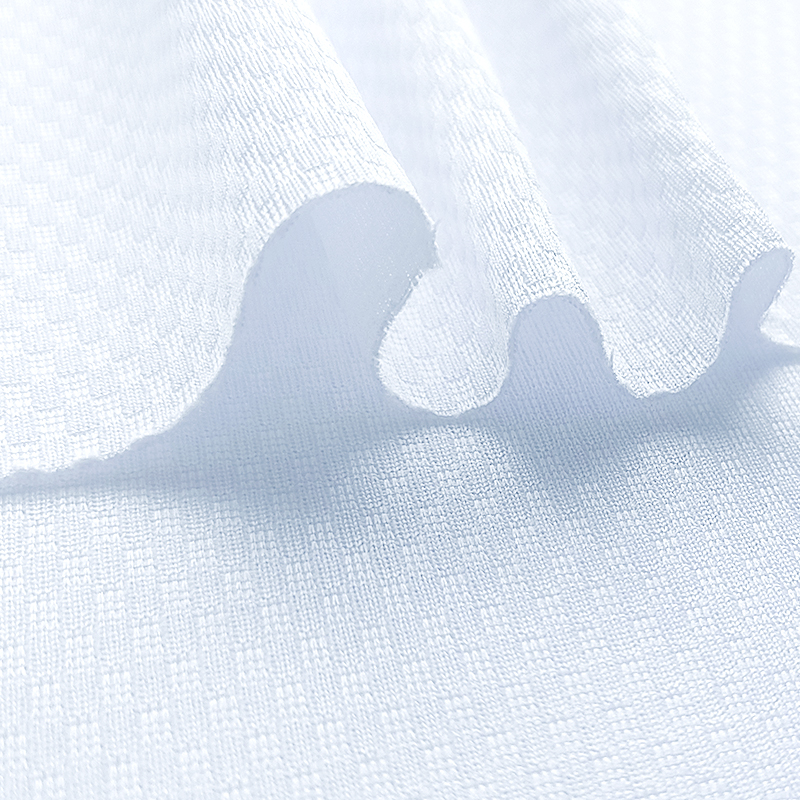
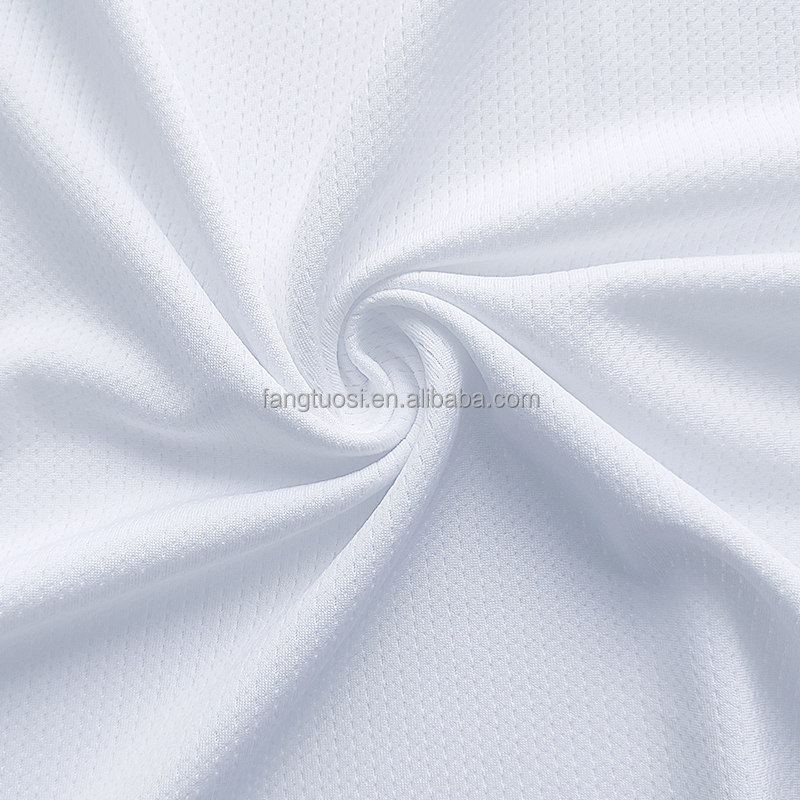
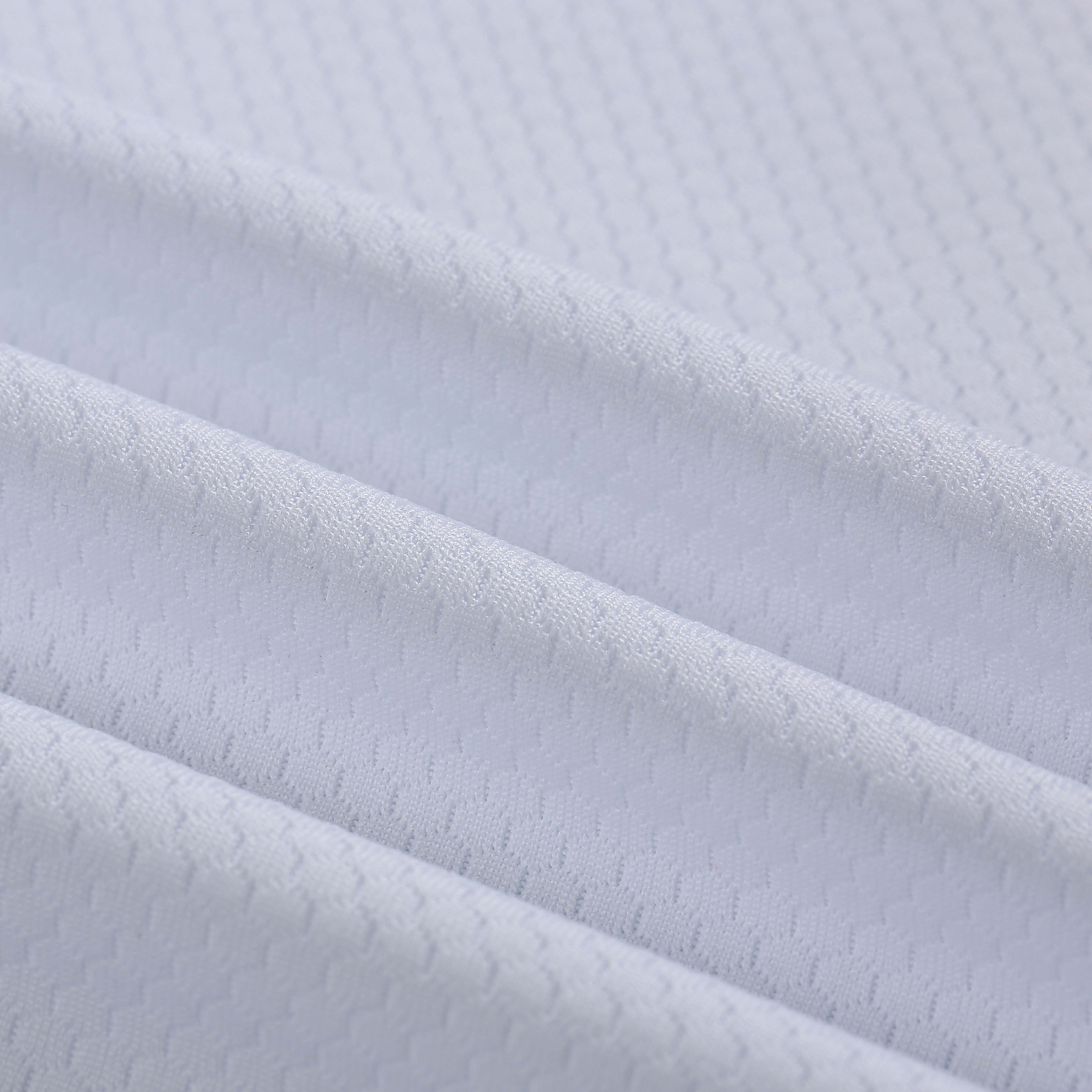
Polyester spandex fabric combines polyester yarn with elastane to create a stretchable textile that is durable, easy to care for, and suitable for repeated movement.
Depending on its knitting structure and finishing process, it can be produced as single jersey, interlock, mesh, jacquard, brushed fabric, or other performance constructions.
Polyester contributes dimensional stability, wrinkle resistance, and relatively low moisture absorption. Spandex adds elasticity and helps garments return to their original shape after stretching.
This combination works well for:
Running shirts
Cycling jerseys
Gym tops
Tracksuits
Team uniforms
Leggings
Swimwear
Sports jackets
Polyester blends can also support sublimation printing, quick-dry finishes, UV protection, cooling treatments, and recycled polyester options. These characteristics make them practical for performance collections that require consistent production across multiple colors and styles.
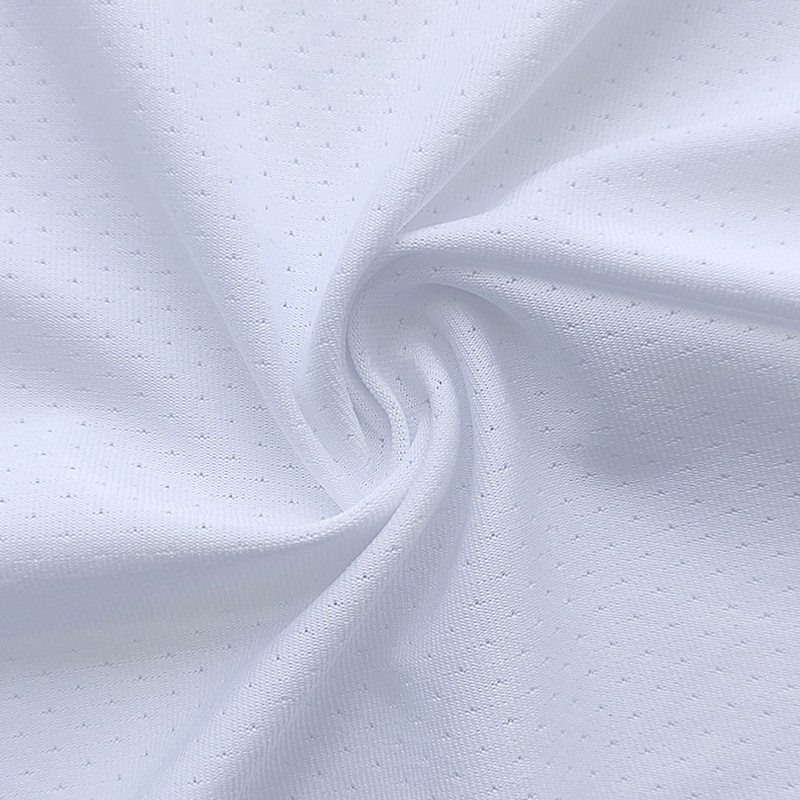
Nylon spandex fabric, also called polyamide elastane fabric, combines nylon’s smooth surface and abrasion resistance with the stretch and recovery of spandex.
It is commonly used for yoga leggings, sports bras, fitted gym wear, swimwear, compression garments, and premium athleisure.
Compared with many polyester blends, nylon spandex usually offers a softer and more refined touch. It can create a smooth, close-to-skin feeling that works especially well for garments designed to follow body movement.
Nylon spandex can be produced with different surface effects, including:
Matte finishes
Brushed surfaces
Ribbed structures
Single jersey
Interlock
Jacquard patterns
However, fiber composition alone does not determine performance. Yarn specification, fabric weight, knitting density, dyeing, heat setting, and finishing also affect softness, recovery, pilling resistance, and color consistency.
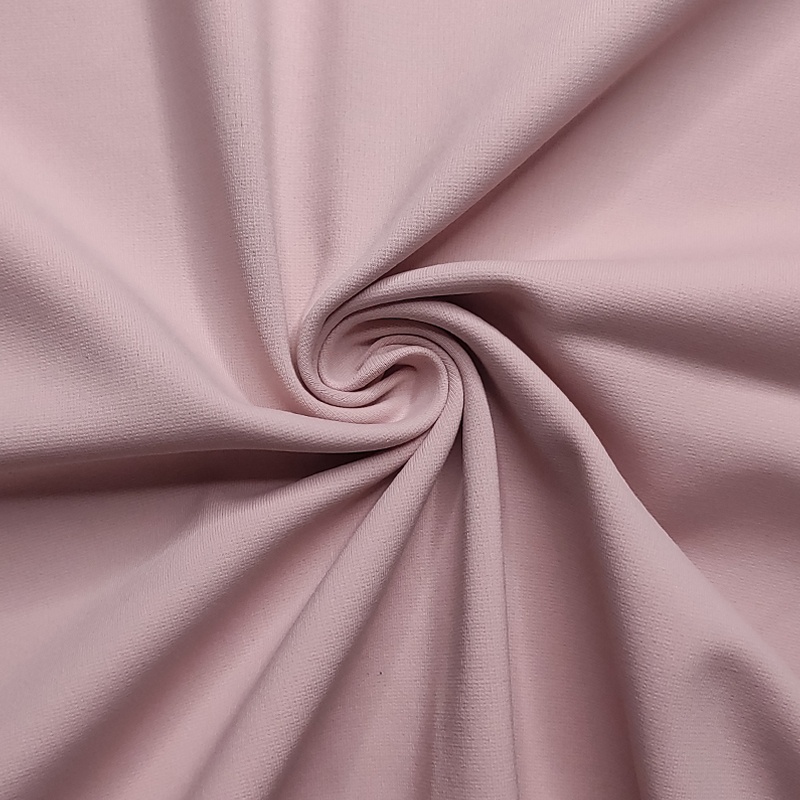
| Comparison Point | Polyester Spandex | Nylon Spandex |
|---|---|---|
| Hand feel | Smooth to slightly crisp; brushing can increase softness | Usually softer, silkier, and more skin-friendly |
| Moisture behavior | Low moisture absorption and generally fast drying | Absorbs more moisture but can still dry efficiently |
| Abrasion resistance | Durable for regular sportswear applications | Often preferred for high-friction, close-fitting garments |
| Color and printing | Suitable for sublimation and teamwear production | Suitable for rich solid colors and premium matte appearances |
| Cost direction | Often more economical for larger programs | Frequently positioned at a higher level |
| Common applications | Jerseys, running tops, cycling wear, and tracksuits | Leggings, yoga wear, sports bras, and swimwear |
| Recycled options | Recycled polyester is widely available | Recycled nylon is available for selected programs |
Both materials can be engineered as 4 way stretch fabric, but the presence of spandex does not automatically guarantee good recovery.
A fabric may stretch significantly yet still show bagging at the knees, waistband, elbows, or seat after repeated wear. This is why stretch percentage should not be the only factor considered during fabric selection.
For leggings fabric and sports bra materials, recovery should be evaluated together with:
Fabric weight
Knitting density
Stretch modulus
Compression level
Repeated extension
Heat-setting quality
A softer fabric is not always more supportive, while a firmer fabric is not automatically more durable.
Nylon spandex often feels smoother during deep stretching and body movement. Polyester spandex can provide a slightly more structured feel and may be easier to adapt across several garments in the same collection.
Polyester absorbs relatively little moisture, which is one reason it is widely used in performance tops and outdoor sportswear.
When combined with a suitable knit structure or moisture-management finish, polyester fabric can spread perspiration across a larger surface and support faster evaporation.
Nylon absorbs more moisture than polyester. This can contribute to a comfortable hand feel, but its drying performance should still be tested for the intended application.
A lightweight nylon jersey behaves differently from a dense nylon interlock. Similarly, an open polyester mesh performs differently from a brushed polyester fabric.
The safest approach is to compare tested samples made with the intended:
Fabric construction
GSM
Color
Finishing treatment
Garment design
Washing method
A general fiber description cannot fully predict how the final garment will perform.
Polyester spandex is a practical option for sublimated jerseys, cycling apparel, football shirts, and other types of printed teamwear because polyester works well with heat-transfer printing.
It is also suitable for solid-dyed activewear, textured jacquards, mesh fabrics, and brushed winter sportswear.
Nylon spandex is often selected when a collection requires rich solid colors, a premium matte appearance, a smooth surface, or a soft-touch finish. It can work especially well for minimal yoga collections and fashion-led athleisure.
Color approval should always be completed on the actual fabric construction. The same color standard may look different on polyester and nylon because of differences in:
Fiber luster
Surface texture
Dye affinity
Knitting density
Finishing process
Brands should therefore approve lab dips and bulk color samples on the final fabric rather than relying only on a digital color reference.
For premium yoga leggings, fitted shorts, and soft sports bras, nylon spandex is often the stronger starting point.
Its smooth touch and body-conforming stretch can improve comfort during bending, stretching, and low-impact training. Dense nylon interlock structures can also provide coverage and support.
Polyester spandex can still be suitable when the collection requires quick drying, printed designs, recycled polyester content, or more cost-efficient production.
For running shirts, football jerseys, cycling tops, and printed team uniforms, polyester spandex is frequently more practical.
It supports quick-dry performance, printing flexibility, durability, and scalable production. Mesh or jacquard constructions can also be used to improve ventilation in high-sweat areas.
Polyester spandex is commonly selected for tracksuit set, training pants, and school sports uniforms because it combines structure, durability, elasticity, and easy-care performance.
Nylon spandex may be used when the collection requires a smoother, lighter, or more premium appearance.
Either fiber can be suitable for swimwear.
The decision should be based on:
Chlorine resistance
UV protection
Colorfastness
Recovery after wet stretching
Resistance to saltwater
Required hand feel
Intended frequency of use
For multi-category activewear collections, using both materials can be more effective than forcing one fabric across every product.
East Xinwei supplies different sportswear fabric constructions for yoga wear, leggings, sports bras, swimwear, cycling apparel, gym wear, team jerseys, and tracksuits.
Available product directions include:
Polyester spandex jersey and interlock
Nylon spandex single jersey and interlock
Four-way stretch jacquard fabric
Recycled polyester spandex blends
Recycled nylon spandex blends
Stretch mesh structures
Quick-dry and moisture-wicking finishes
Cooling, antibacterial, and UPF options
For a new fabric development, provide the garment type, target composition, GSM, usable width, color, hand feel, stretch direction, functional requirements, estimated order quantity, and intended market.
These details help the fabric team recommend a suitable construction and prepare relevant samples.
There is no universal winner in the polyester spandex vs nylon spandex comparison.
Polyester spandex is often the more practical option for fast-drying tops, printed sportswear, team uniforms, cycling apparel, tracksuits, and cost-sensitive production programs.
Nylon spandex is often favored for premium leggings, yoga wear, sports bras, swimwear, and close-fitting garments that require a softer touch and smooth appearance.
The final decision should be based on the finished garment rather than the fiber name alone. By comparing fabric construction, GSM, stretch recovery, color, finishing, testing results, and cost, brands can select a material that performs consistently from sampling through bulk production.
East Xinwei supports customized fabric selection and sample development for different activewear applications. Share your specifications and intended garment use to discuss a suitable polyester spandex or nylon spandex solution.