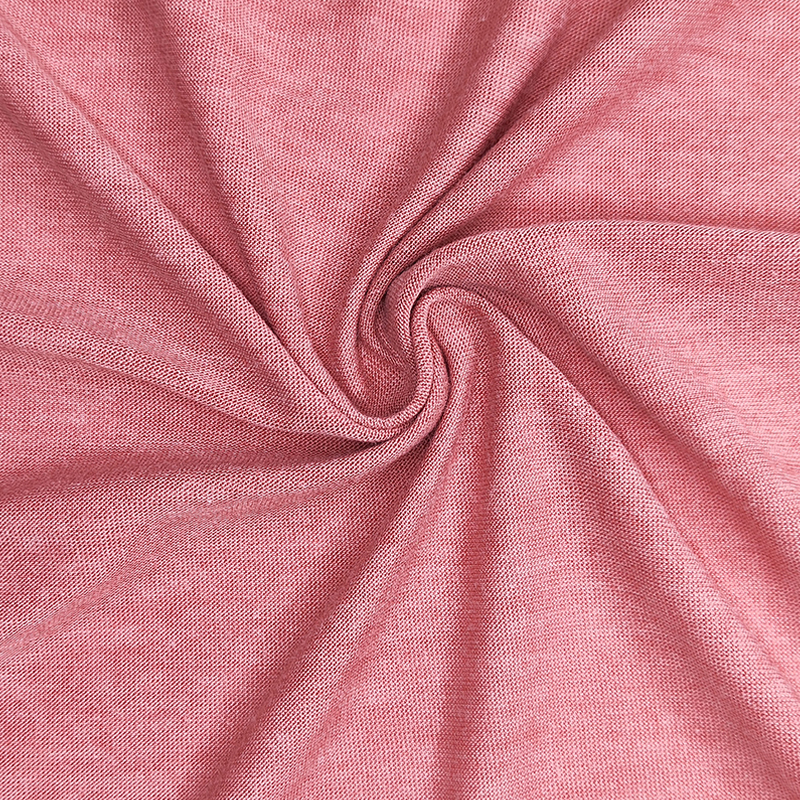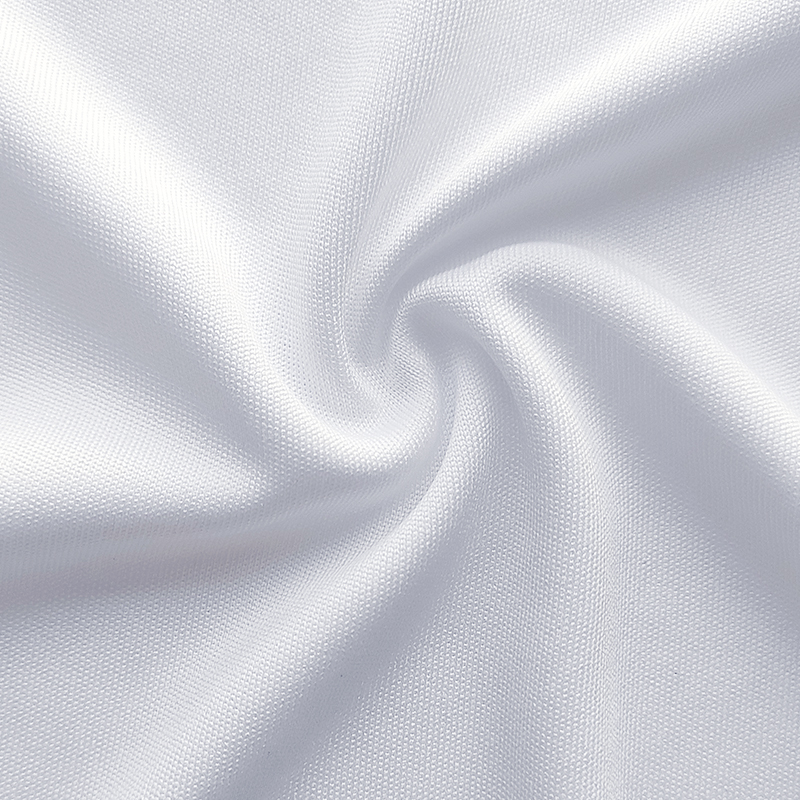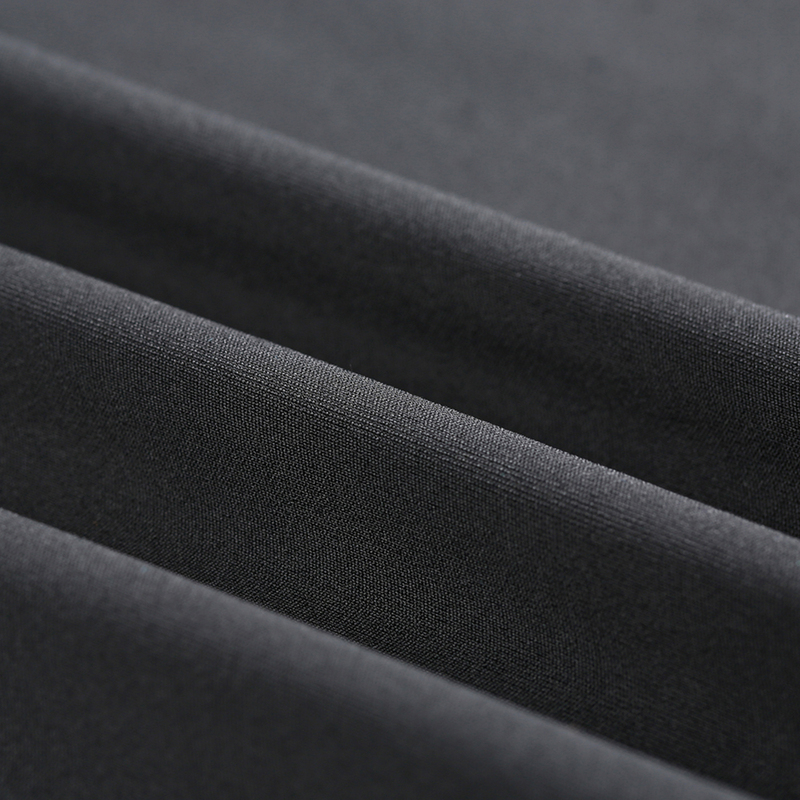
Mountain bike fabric and road cycling jersey fabric may belong to the same sportswear category, but they are designed around very different riding conditions. Road cycling typically emphasizes low weight, close fit, moisture management and aerodynamic efficiency. Mountain biking adds repeated body movement, trail abrasion, snagging risks and more unpredictable weather exposure.
That means cycling jersey material should not be selected from fiber content alone. Polyester-spandex, nylon-spandex, jacquard mesh, cooling fabrics and recycled constructions can all work for cycling, but their suitability depends on terrain, garment zone and riding style.
East Xinwei's current cycling fabric range includes polyester-spandex, nylon-spandex, recycled polyester and engineered mesh options for different cycling applications.

The basic movements may appear similar, but the fabric demands are different.
Road cycling prioritizes efficiency. Riders often maintain relatively consistent body positions for long periods, so lightweight construction, moisture transport, close fit and smooth surfaces become important. Fabrics also need enough stretch to follow the body without excessive movement.
Mountain biking prioritizes mobility and toughness. Riders repeatedly stand on the pedals, shift weight, rotate the torso, absorb impacts and move through vegetation or rough terrain. Abrasion resistance, multidirectional stretch and a less restrictive fit therefore become more important.
Environmental exposure also differs. Road jerseys may focus heavily on heat and UV exposure, while MTB garments may also encounter branches, dirt, mud and more frequent mechanical contact.
East Xinwei specifically positions its polyester-spandex cycling fabrics for rough terrain and brush contact while combining moisture management and four-way stretch.
The important point is that two garments called “cycling jerseys” can require very different textile engineering.
Polyester and nylon are both widely used in technical sportswear, but each brings a different performance direction.
| Characteristic | Polyester-Based Cycling Fabric | Nylon-Based Cycling Fabric |
|---|---|---|
| Drying behavior | Generally strong | Good, depending on construction |
| Sublimation compatibility | Strong | More limited than polyester |
| Weight potential | Lightweight | Lightweight to medium |
| Hand feel | Technical / smooth | Often softer |
| Abrasion resistance | Good | Often stronger |
| Stretch with spandex | High | High |
Polyester works well where low moisture absorption, quick drying and sublimation compatibility matter. This makes it especially useful for road jerseys that use complex team graphics or all-over prints.
Nylon is often selected where softness, toughness and abrasion resistance are priorities. East Xinwei's nylon-spandex cycling fabrics combine four-way stretch with durability, while its cooling nylon-spandex jersey is positioned for cycling and other high-mobility sports.
Spandex adds another variable. Whether combined with polyester or nylon, it provides stretch and recovery needed for dynamic riding positions.
Mountain biking requires movement in more directions than steady seated pedaling.
A rider may move forward and backward over the bike, rotate during technical turns, stand during climbs, absorb drops and repeatedly shift body position. This creates fabric stress along both horizontal and vertical directions.
Four-way stretch can therefore help an MTB jersey follow multidirectional movement more naturally than a fabric designed mainly for limited directional stretch.
But stretch alone is not enough.
A fabric can extend easily and still perform poorly if it does not recover. Weak recovery can lead to sagging, loose elbows, distorted panels or unstable garment fit after repeated movement.
East Xinwei's cycling range includes polyester-spandex constructions with 15–20% spandex specifically positioned around four-way stretch for dynamic movements such as jumps and sharp turns.
For mountain bike fabric, the more useful question is not “How stretchy is it?” but “Does it stretch in the necessary directions and return to its original shape afterward?”
A common assumption is that the most open mesh must always be the best cycling jersey material. That can be too simplistic, particularly off-road.
Very open structures can provide excellent ventilation, but they may not be ideal in every part of a mountain bike jersey. Shoulders and side panels can experience backpack straps, branches or repeated friction, while other areas need maximum airflow.
A zoned approach can use lighter or more open structures where heat release matters most and denser constructions where durability matters more.
East Xinwei's cycling portfolio includes jacquard mesh, cooling jersey, polyester-spandex and nylon-spandex structures, providing different combinations of airflow, stretch and durability rather than one universal construction.
This creates a more useful design principle: breathability should be positioned where the body needs it rather than maximized equally across every panel.
Long rides expose cycling clothing to more than perspiration.
Depending on climate and terrain, relevant functions can include:
UV protection for long periods of direct outdoor exposure.
Cooling or moisture management for hot-weather riding.
Odor-control or antibacterial treatments where perspiration accumulates during extended use.
Water repellency or weather resistance for changing outdoor conditions.
East Xinwei's cycling range includes UPF50+, cooling, moisture-wicking and antibacterial options, while specific mountain bike constructions also combine recycled polyester, spandex and odor-control positioning.
Not every jersey needs every function. A lightweight summer road jersey may prioritize moisture management and UV performance, while an MTB jersey for forest trails may place more value on abrasion resistance, stretch and durability.
Functional finishing should therefore follow the riding environment rather than becoming a checklist added to every fabric.
Sustainability is increasingly part of cycling apparel development, but recycled content still has to satisfy the same functional expectations as virgin performance textiles.
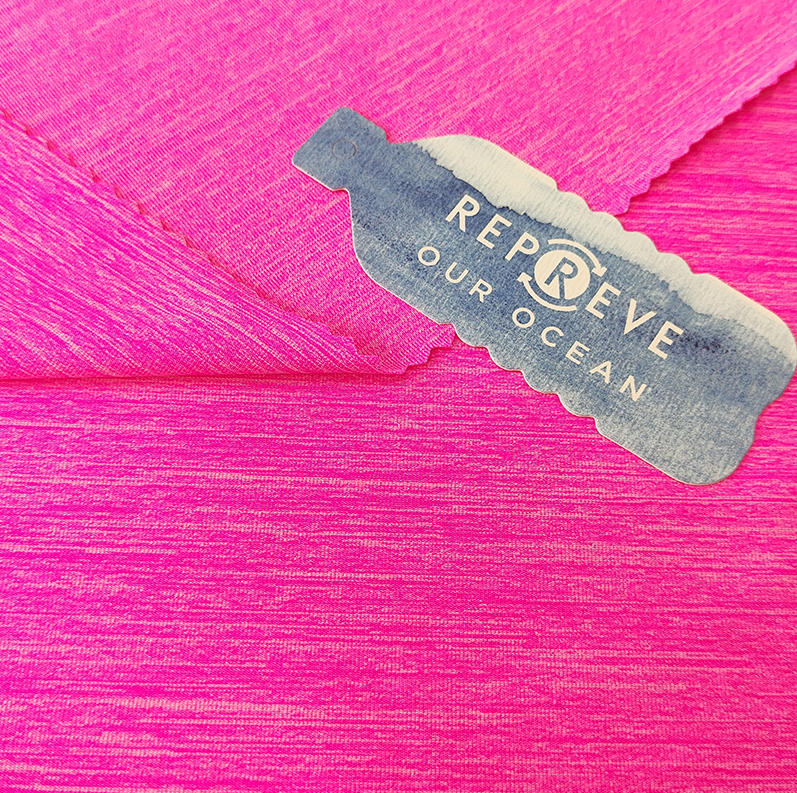
East Xinwei currently offers recycled polyester-spandex cycling jersey fabrics, including a GRS-certified 140 gsm construction positioned for breathability, moisture management and lightweight riding applications. Its broader recycled fabric category also covers GRS-certified RPET and recycled nylon systems with traceability from recycled raw material to finished fabric.
The important distinction is that recycled content does not replace performance testing.
A recycled bicycle fabric still needs to meet the requirements of the final garment: stretch recovery, abrasion resistance, dimensional stability, drying behavior, colorfastness and the intended print or finishing process.
Certification such as GRS helps verify recycled content and supply-chain practices, but brands still need to evaluate the actual textile specification for the intended ride environment.
Road cycling and mountain biking belong to the same sport, but they place different mechanical and environmental demands on fabric.
Road jerseys often prioritize low weight, close fit, moisture control and smooth printable surfaces. Mountain biking shifts more attention toward four-way stretch, abrasion resistance, freer body movement and strategic fabric zoning.
The right cycling fabric therefore depends on the balance between fiber, knit structure, stretch recovery, weight, ventilation, durability and environmental exposure.
The most effective cycling textile is not simply the lightest or most breathable fabric. It is the one engineered around the terrain and the way the rider actually moves.
Polyester-spandex and nylon-spandex are common options because they can combine stretch, moisture management and durability. The best construction depends on terrain and garment design.
Modern cycling jerseys commonly use polyester, nylon and spandex blends, including recycled versions of these fibers.
Neither is universally better. Polyester is strong for drying and sublimation, while nylon can offer a softer hand and strong abrasion resistance.
MTB riding involves multidirectional body movement, including standing, turning and shifting weight, so stretch helps the garment move with the rider.
Yes, particularly in ventilation zones, but very open mesh may not be ideal in high-abrasion areas.
Yes. East Xinwei currently offers GRS-certified recycled polyester cycling fabrics designed for moisture management and performance applications.
PREV