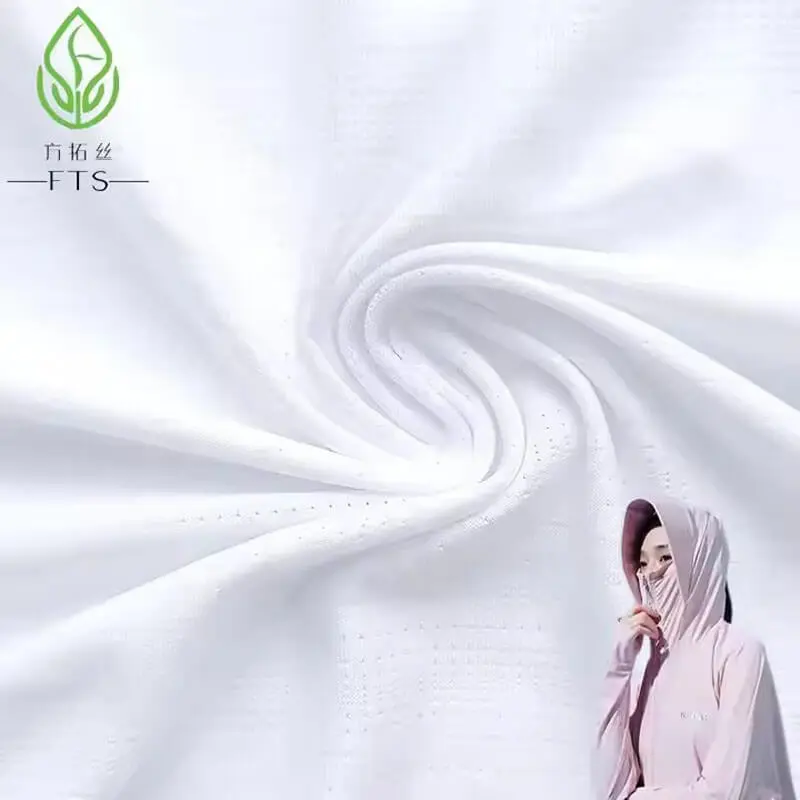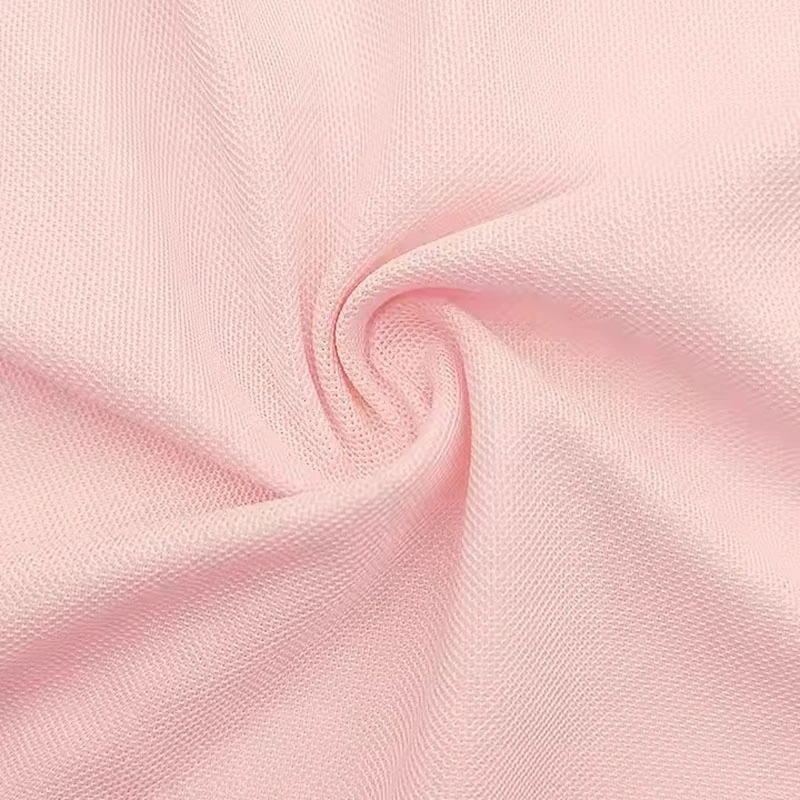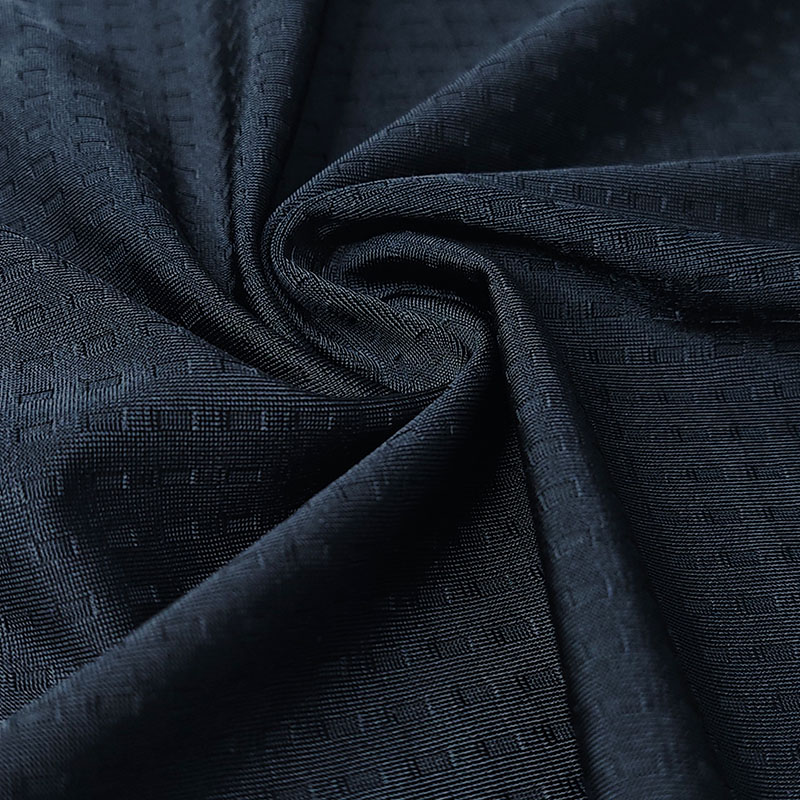
CVC fabric and TC fabric are both cotton-polyester blends, but changing which fiber dominates can noticeably change how the finished textile feels, dries, holds its shape and performs after repeated wear.
In East Xinwei's current CVC/TC fabric category, CVC is presented as a cotton-dominant blend with at least 60% cotton, while TC is polyester-dominant with at least 60% polyester. The distinction is useful, but exact percentages should always be confirmed from the individual fabric specification rather than assumed from the CVC or TC label alone.
The real question is therefore not simply whether CVC or TC is "better." It is how the cotton-polyester ratio works together with knit structure, GSM and finishing to create the required balance of comfort and durability.
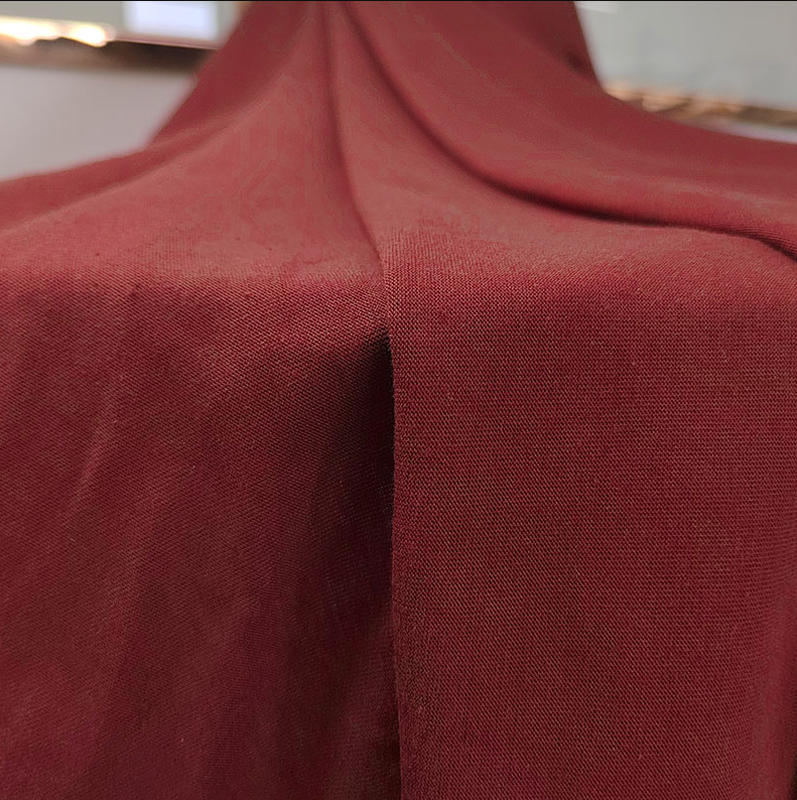
CVC is commonly understood as Chief Value Cotton, indicating that cotton is the dominant fiber in the blend. TC reverses that balance by making polyester the larger component. East Xinwei currently positions its CVC fabrics toward greater natural comfort and moisture absorption, while its TC fabrics emphasize durability, shape retention, quicker drying and easier maintenance.
| Feature | CVC | TC |
|---|---|---|
| Dominant fiber | Cotton | Polyester |
| General hand feel | Softer / more natural | Crisper / more synthetic |
| Moisture absorption | Generally higher | Generally lower |
| Shape retention | Moderate | Usually stronger |
| Drying tendency | Moderate | Faster |
| Typical direction | Comfort-focused apparel | Durability / easy-care applications |
These are general performance directions rather than guarantees. Two fabrics with different yarns, knit constructions or finishing processes can still behave very differently even when both carry the same CVC classification.
Cotton and polyester contribute different characteristics to the finished fabric, so changing their proportions changes the overall balance.
Higher cotton content generally contributes a softer, more natural hand feel, greater moisture absorption and the familiar comfort associated with cotton-rich clothing. East Xinwei's CVC category is therefore positioned for uses including casualwear, sportswear and other applications where skin comfort is important.
Higher polyester content generally shifts the textile toward stronger dimensional stability, quicker drying, wrinkle resistance and easier care. East Xinwei consequently positions TC toward uniforms and other durability-focused applications.
This is why a 60/40 cotton-polyester fabric should not be expected to feel or behave exactly like an 80/20 blend.
Blend ratio is not merely a number on a specification sheet. It changes the balance between cotton comfort and polyester performance.
One common misunderstanding is that a fabric that absorbs more sweat must also dry faster.
These are different processes.
Cotton is relatively absorbent, so a cotton-rich CVC cotton fabric can take up moisture effectively. Polyester absorbs much less moisture into the fiber itself, but appropriate yarn, knit and finishing structures can help move liquid across the fabric surface and support faster evaporation.
East Xinwei's existing technical content makes the same distinction between moisture-wicking and quick-dry performance: moisture wicking describes the transfer of perspiration away from the skin, while quick drying describes how rapidly that moisture subsequently evaporates.
This explains why increasing cotton content does not automatically improve drying speed.
East Xinwei currently offers a 60% cotton / 40% polyester CVC sports jersey that combines cotton-rich comfort with moisture-management and quick-dry positioning, illustrating how fiber ratio and fabric engineering can work together rather than acting independently.
Fiber composition tells only part of the story.
Imagine two fabrics that both contain 60% cotton and 40% polyester. If one is a lightweight single jersey and another uses a thicker double-knit or terry structure, their airflow, weight, drape, warmth and drying behavior will not be identical.
A single jersey generally creates a lighter, more flexible construction suitable for T-shirts and sports-lifestyle tops. A denser or more complex knit can provide greater body, warmth or structural stability.
East Xinwei's own CVC portfolio includes cotton-polyester sports single jerseys, demonstrating that the company treats construction as another performance variable alongside fiber percentage. Its CVC single-jersey products are positioned around breathability, comfort, resilience and shape retention.
So when comparing CVC material cloth, buyers and designers should consider composition together with knit structure, GSM and finishing.
A composition label alone cannot predict the complete wearing experience.
CVC and TC become easier to understand when considered in relation to the garment's priorities.
For casual T-shirts, a cotton-dominant CVC construction can make sense where softness, skin feel and everyday comfort are central. Sports-lifestyle tops may use CVC to balance that cotton character with additional polyester resilience.
Hoodies introduce another variable because GSM and knit structure can become more important than the CVC/TC label alone. A heavier construction may be selected for body and warmth, while the fiber blend influences care and hand feel.
Uniforms and workwear often place more emphasis on repeated laundering, shape retention, wrinkle resistance and durability. This helps explain why East Xinwei positions polyester-dominant TC fabrics strongly toward industrial uniforms and durable workwear.
The better question is therefore not "Which fabric is best?" but which balance of comfort, drying, stability and durability fits the intended garment?
Long-term fabric performance should be considered separately from how a new sample feels in the hand. Without actual test data, specific results after 20, 50 or 100 washes should not be assumed.
Over repeated wear and laundering, useful evaluation points include:
Dimensional stability and shrinkage: Does the garment maintain its intended width, length and overall fit?
Pilling and surface appearance: Does repeated friction create noticeable fuzz or pills?
Color retention: Does the shade remain consistent through the expected care cycle?
Hand feel: Does the cotton-rich softness or intended surface character remain?
Shape retention: Do necklines, hems and garment panels retain their structure?
A higher polyester ratio may support easier-care and dimensional-stability goals, while higher cotton content can preserve the natural hand-feel direction buyers may want from CVC. But fiber percentage is not the only variable: yarn quality, knitting, dyeing and finishing also influence long-term results.
That is why bulk fabric assessment should be based on the actual specification and required testing standard rather than the blend name alone.
CVC fabric and TC fabric represent two different ways of balancing cotton and polyester.
Cotton-rich CVC generally moves the fabric toward softness, absorption and natural comfort, while polyester-rich TC places greater emphasis on drying, shape retention and easy-care durability.
However, fiber ratio is only one part of fabric engineering. Knit construction, GSM, yarn, finishing and intended garment use can change performance just as significantly.
The most useful way to compare CVC and TC is therefore not to ask which one is universally superior, but which combination of comfort, structure, moisture behavior and durability best suits the final product.
CVC is a cotton-polyester blend in which cotton is the dominant fiber. East Xinwei currently classifies its CVC category as containing at least 60% cotton.
CVC is cotton-dominant, while TC is polyester-dominant, creating different balances of softness, moisture absorption, drying and dimensional stability.
CVC is generally cotton-dominant. Exact percentages should still be checked on the individual fabric specification.
It can be. Breathability depends not only on cotton content but also on yarn and knit structure; East Xinwei offers CVC single-jersey fabrics specifically positioned for breathable apparel applications.
Shrinkage depends on the blend, construction and finishing. The actual dimensional-stability specification or wash-test result should be checked rather than assuming performance from the CVC label.
CVC generally has a more cotton-like, softer hand because cotton is the dominant fiber, while TC typically has a more polyester-oriented feel and easy-care performance.
PREV
NEXT