Moisture management is one of the most important performance requirements in modern activewear. Running shirts, football jerseys, cycling tops, gym wear, and training uniforms must help wearers remain comfortable during movement and perspiration.
However, buyers often treat moisture-wicking fabric and quick dry fabric as if they mean the same thing. These properties are closely related, but they describe different stages of moisture management.
Moisture wicking refers to how effectively a fabric transfers perspiration away from the skin. Quick drying describes how rapidly that moisture evaporates after it has spread across the fabric. A material may perform well in one area without delivering equally strong results in the other.
Understanding moisture wicking vs quick dry performance helps sportswear brands choose fabrics according to garment construction, activity intensity, climate, fit, and end-user expectations.
A moisture-wicking fabric is designed to transfer liquid perspiration from the inner surface of a garment toward its outer surface.
This movement is generally supported by capillary action. Small spaces between fibers and yarns draw moisture through the fabric and distribute it across a larger surface area.
The main purpose is to reduce the amount of sweat remaining next to the wearer’s skin. When moisture spreads more evenly, the garment usually feels less wet and uncomfortable during exercise.
Moisture-wicking performance depends on several factors:
Fiber type
Yarn structure
Knitting construction
Fabric density
Fabric weight
Surface treatment
Finishing process
Polyester is widely used in performance apparel because it absorbs relatively little moisture. However, polyester fiber alone does not automatically produce effective wicking. The yarn, knitting structure, and finishing process must also support moisture transfer.
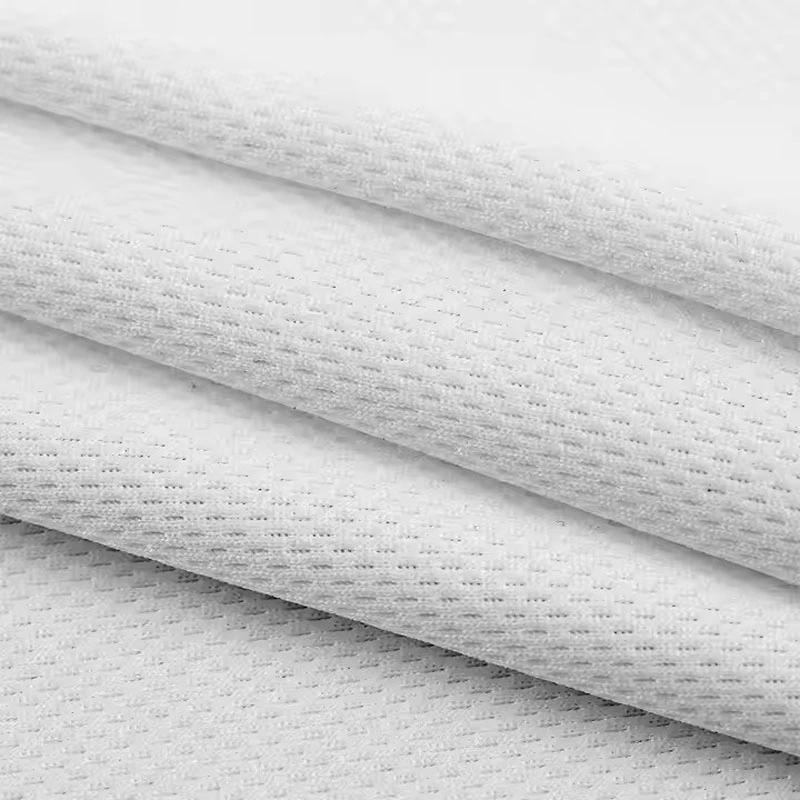
Mesh, bird-eye, honeycomb, jacquard, and engineered jersey structures can help guide moisture while improving airflow.
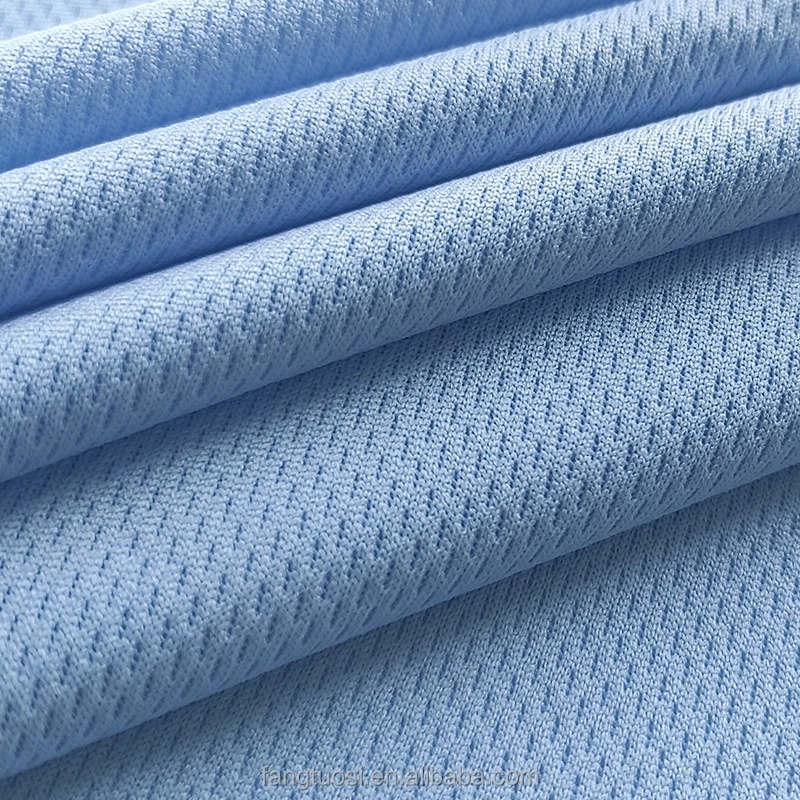
A quick dry fabric is designed to release moisture efficiently after it has been absorbed or transferred across the textile surface.
Drying speed depends partly on how much water the fiber retains. Polyester generally absorbs less moisture than cotton, which is why polyester sportswear often dries faster after exercise or washing.
Fabric construction also affects drying time. A lightweight, open-knit structure normally dries faster than a dense and heavy fabric because more surface area is exposed to moving air.
The main factors affecting drying performance include:
Fiber moisture absorption
Fabric GSM
Knit openness
Yarn size
Air permeability
Exposed surface area
Environmental temperature
Humidity
A fabric may spread moisture effectively but still dry slowly if it is thick, dense, or highly absorbent. In contrast, a lightweight material may dry quickly without moving perspiration away from the skin particularly well.
For this reason, buyers should not evaluate drying performance based only on fiber composition.
| Comparison Point | Moisture-Wicking Fabric | Quick-Dry Fabric |
|---|---|---|
| Main function | Moves perspiration away from the skin | Helps moisture evaporate rapidly |
| Primary mechanism | Capillary transfer and surface spreading | Low moisture retention and increased evaporation |
| Main wearer benefit | Reduces wetness next to the skin | Shortens the time the garment remains damp |
| Key influencing factors | Yarn, knit structure, density, and finish | Fiber absorption, GSM, airflow, and surface area |
| Typical applications | Running, cycling, football, and gym wear | Training shirts, outdoor sportswear, and travel apparel |
| Testing focus | Moisture transfer and spreading | Drying rate and remaining moisture |
High-performance sportswear usually requires both properties. Perspiration should first move away from the wearer’s skin, spread across the outer fabric surface, and then evaporate efficiently.
Fabric construction can influence moisture performance as much as fiber content.
A smooth jersey surface can provide comfortable skin contact, while a textured structure may create channels that help moisture move through the fabric. Open mesh can improve ventilation, although excessively large openings may reduce coverage or affect printing quality.
Common structures used in sportswear fabric include the following.
Bird-eye mesh contains small, evenly distributed openings. It is widely used in football shirts, training tops, sports T-shirts, and breathable uniforms.
The structure improves airflow and gives the fabric a recognizable athletic appearance.
Honeycomb fabric has a raised or cellular surface. This textured construction can support ventilation while giving the finished garment a more distinctive appearance.
It is suitable for sports T-shirts, football jerseys, basketball uniforms, and training apparel.
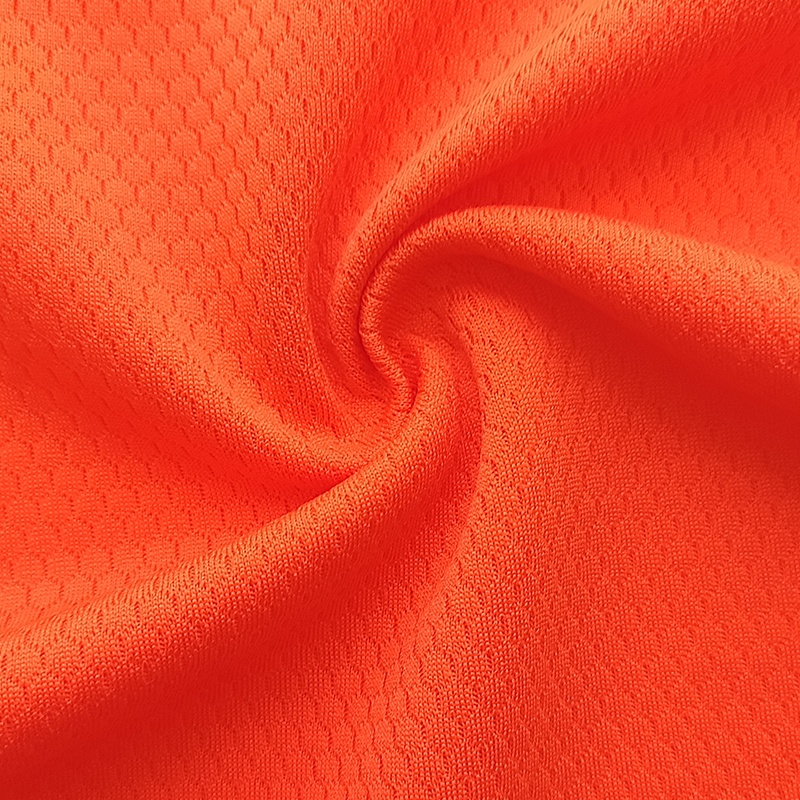
Interlock is smoother and normally denser than mesh. It provides better coverage, dimensional stability, and durability.
Lightweight polyester interlock is commonly used for running shirts, cycling tops, and team uniforms. Polyester spandex interlock can also be used for stretch activewear.
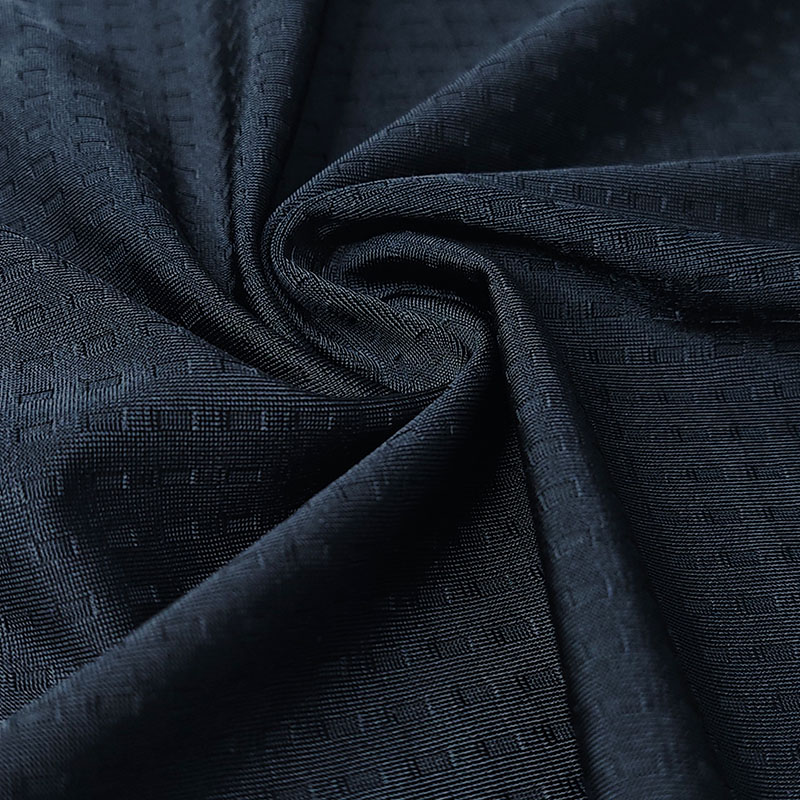
Jacquard knitting creates patterns directly in the fabric structure. These patterns can improve appearance and may also be designed to support airflow in selected zones.
Jacquard structures are suitable for sports brands that want performance and visual differentiation within the same fabric.
Polyester is one of the most common choices for dry fit fabric because it absorbs little water, dries efficiently, and supports a wide range of functional finishes.
It is suitable for:
Running shirts
Football jerseys
Cycling apparel
Gym tops
Training uniforms
Tracksuits
Polyester also works well with sublimation printing, making it practical for customized teamwear and sports jerseys.
Nylon normally provides a softer surface and smoother hand feel. It is frequently used for yoga wear, leggings, sports bras, and fitted gym apparel.
Although nylon absorbs more moisture than polyester, a well-engineered nylon fabric can still provide effective moisture management. Its final performance depends on GSM, yarn selection, knitting density, and finishing.
Cotton absorbs moisture readily, which can feel comfortable during light activity. However, it may retain perspiration and remain wet for longer than polyester.
Cotton-polyester blends offer a balance between natural hand feel, dimensional stability, and drying performance. They are often used in casual sportswear, polo shirts, T-shirts, and low-intensity training apparel.
Running tops and gym shirts require rapid moisture transfer, strong airflow, and low garment weight.
Lightweight polyester mesh, bird-eye, or jersey fabrics are practical starting points. Buyers should also assess chafing risk, seam placement, drying speed, and performance after repeated washing.
Team jerseys require breathability, durability, printing compatibility, and color consistency.
Polyester mesh and jacquard fabrics are commonly selected because they support ventilation and customized graphics. The fabric should also resist snagging and distortion during frequent use.
Cycling garments require moisture management, stretch, aerodynamic fit, and comfort during prolonged body contact.
A smooth polyester spandex fabric may be used for the main body, while mesh panels can be placed under the arms, across the back, or in other high-heat areas.
Yoga and studio garments prioritize softness, stretch recovery, coverage, and comfort.
Nylon spandex or polyester spandex interlock fabrics are often suitable. Moisture performance remains important, but it must be balanced with opacity, support, and shape retention.
Outdoor training apparel may require moisture management together with cooling, UV protection, or antibacterial performance.
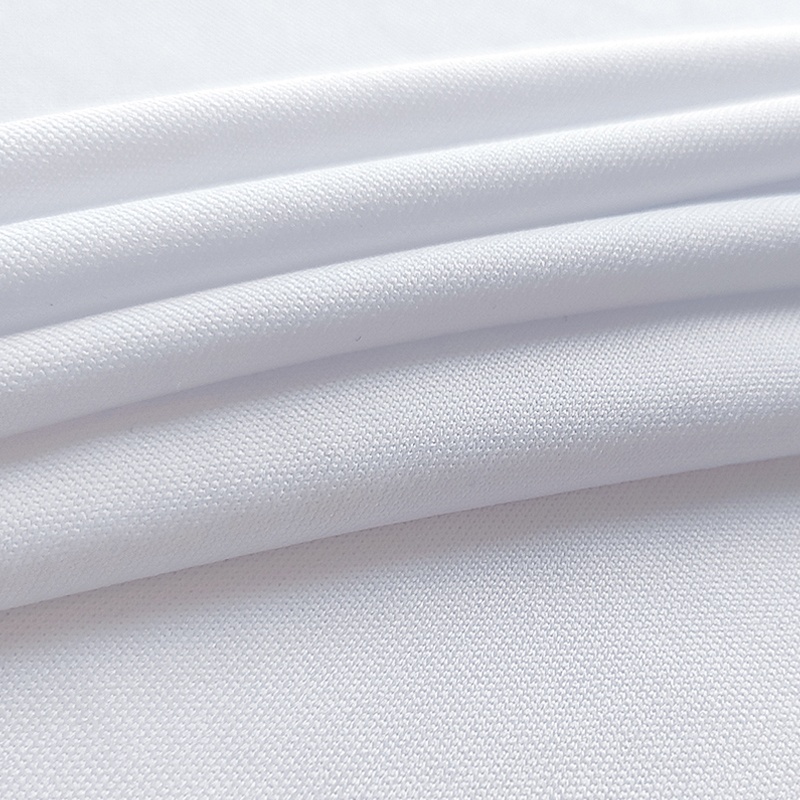
For sports-inspired T-shirts, polo shirts, and travel apparel, buyers may choose polyester, cotton blends, or functional pique fabrics.
The final choice depends on whether the brand prioritizes fast drying, natural softness, easy care, or everyday comfort.
Marketing descriptions such as “quick dry,” “moisture wicking,” or “Dri-Fit” should be supported by sample evaluation and relevant testing.
Before bulk production, buyers should confirm:
Fabric composition
Finished GSM
Usable width
Knit structure
Moisture-spreading performance
Drying time
Air permeability
Shrinkage after washing
Colorfastness
Functional durability after repeated laundering
A simple water-drop test can provide an initial indication of moisture spreading, but it should not replace standardized laboratory testing.
The finished fabric should also be evaluated in the intended color and construction. Dyeing, printing, brushing, heat setting, and other finishes may influence moisture behavior.
East Xinwei supplies functional fabric for running apparel, football jerseys, cycling wear, gym clothing, yoga wear, sports T-shirts, and other performance garments.
Available development directions include:
Moisture-wicking polyester fabric
Quick-dry mesh and jersey
Bird-eye and honeycomb structures
Polyester spandex fabric
Nylon spandex fabric
Cooling fabric
Antibacterial fabric
UPF fabric
Recycled polyester and recycled nylon options
To receive a suitable fabric recommendation, buyers should provide the garment type, target composition, GSM, usable width, color, stretch requirement, functional performance, estimated order quantity, and intended market.